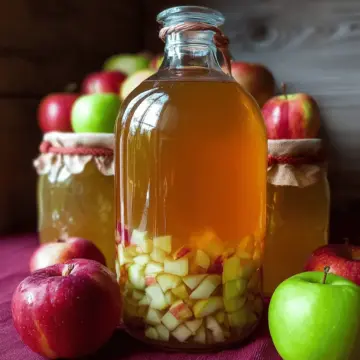
Homemade Apple Cider Vinegar
Preserving Apples: How to Make Homemade Apple Cider Vinegar is a healthy way to use excess apples or scraps.
Equipment
- fermenting vessel
Ingredients
Apple Ingredients
- 1 gallon filtered water
- 1 cup sugar per gallon of water
- diced apple chunks or apple scraps (skins, cores) enough to fill half of the fermenting vessel
Instructions
Preparation Instructions
- Wash and chop the apples into chunks, or gather collected apple scraps and add them to your jar or other large fermenting vessel until it filled about halfway full.
- Pour lukewarm filtered water over the apples into the container until it is almost full, but measure/note the total amount of water added.
- Stir in sugar in ratios of 1 tablespoon of sugar per cup of water added, or for larger batches, 1 cup of sugar per gallon of water added.
- Optional: Add a splash of finished organic apple cider vinegar to inoculate the culture and encourage fermenting.
- Stir combined ingredients until thoroughly mixed, and cover with breathable material.
- Store in a dark location around 70 to 75 degrees F for two weeks to ferment, and stir every day to prevent mold from forming on top.
- After two weeks, strain and reserve the liquid into a similar sized container and cover again. Compost the spent fruit.
- Move the covered container of liquid to a location that is out of the way to continue long term fermentation. Maintain dark.
- After one month, sample the vinegar to see if it is finished fermenting and tart to your liking. If needed, allow it to continue to ferment for a total of two to three months.
- Once it is fermented to your desired flavor, transfer the apple cider vinegar into bottles with lids, and store at room temperature or in the refrigerator, and enjoy!
- Properly fermented apple cider vinegar should stay good for over a year.
Notes
This recipe makes use of unwanted apple scraps, minimizing waste and creating a healthy condiment.
Nutrition
Serving: 1tablespoonCalories: 3kcal
Tried this recipe?Let us know how it was!